
Sustainability · June 28, 2026
Regenerative farming and animal welfare: why the dehesa is a model
Sustainability has stopped being a talking point and become a purchasing criterion. How extensive farming and open-pasture animal welfare define product quality.
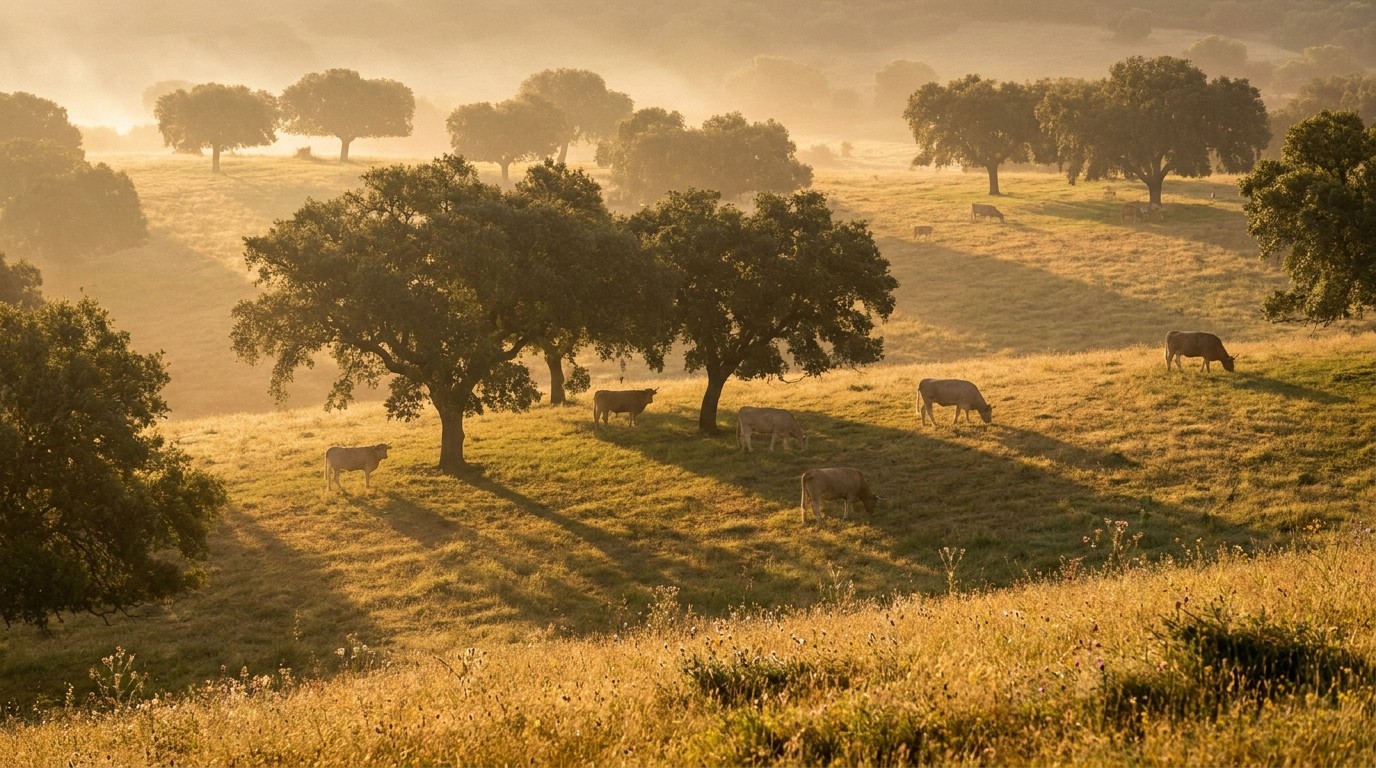
For years, sustainability was treated as a marketing argument. Today it is a real purchasing criterion: distribution chains, HORECA and end consumers ask how and where the animal is raised before closing a deal. And the answer starts long before the slaughterhouse, in the rearing model itself.
The dehesa as a system
The dehesa — that balance of pasture, woodland and extensive livestock — is one of the finest examples of regenerative farming there is. The animal grazes freely, the soil captures carbon, biodiversity is preserved, and the result is meat with a distinct profile: better-quality fat, deeper flavor, and an origin story worth telling.
Animal welfare equals quality
Animal welfare isn't just about ethics: it has a direct impact on the product. An animal raised without stress, processed under careful protocols, yields meat with more stable texture and color. That's why we audit our suppliers on the ground: we know exactly who we work with, and that due diligence is part of our value proposition.
What's coming
Carbon footprint will increasingly weigh on major retail purchasing specifications and on exports to Europe. Getting ahead of the curve — working with regenerative farms and documenting impact — will stop being optional and become a condition for accessing the most demanding markets.